







Gaertner Lab
Emmy-Noether Forschungsgruppe
Klinische Forschungsgruppe zur Lungenphysiologie von Frühgeborenen und Verbesserung der Neugeborenen-Erstversorgung und -Reanimation
Vincent Gaertner
Forschungsthemen
- Understanding the physiology of fetal-to-neonatal transition
- Advancing clinical knowledge on neonatal resuscitation and stabilization after birth
- Illuminating (patho-)physiology of different ventilation techniques in preterm infants
- Supporting clinical decision-making by performing randomized clinical trials and systematic meta-analyses
Kontakt
Vincent D. Gaertner, MD BSc
Principal Investigator
Fields of research
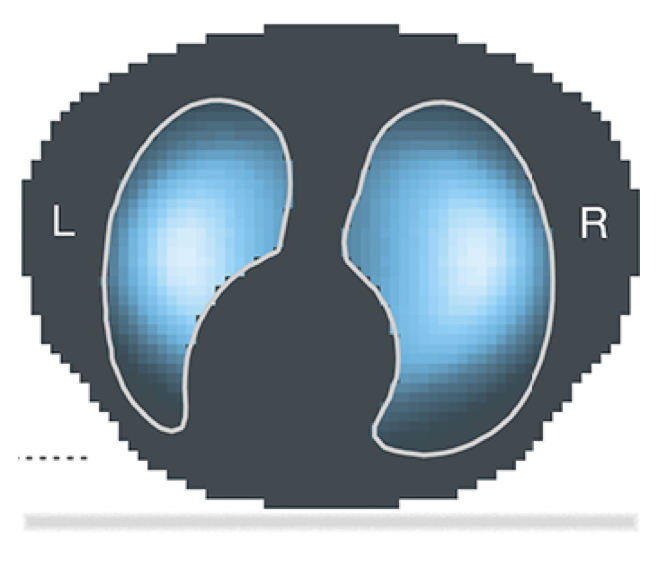
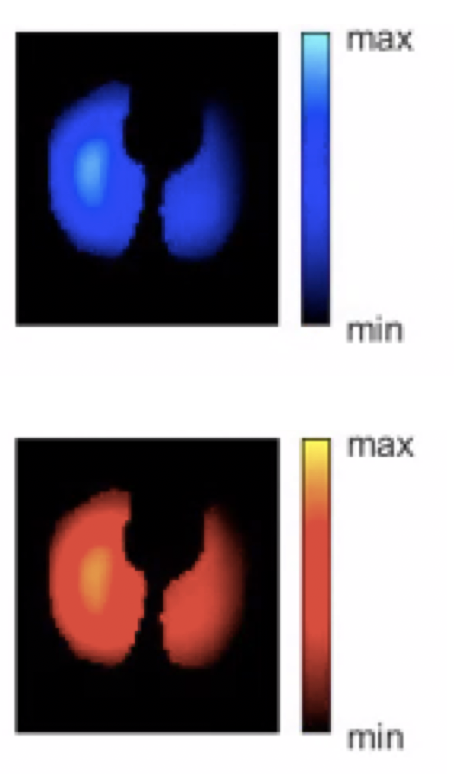
The day we are born is the single most dangerous day in our life with the highest mortality rate. Accordingly, birth asphyxia and its complications are the most important factor for childhood mortality worldwide. This is due to the complex transition the lung needs to undergo within seconds after birth: Before birth, the lung is liquid-filled and oxygenation occurs via the placenta. After birth, the infant needs to start crying to aerate the lung. We are committed to unraveling the detailed pulmonary mechanisms of this unique moment in life. To do this, we collect various physiological data in human infants immediately after birth, starting with the first breath to better understand initial lung aeration and pulmonary perfusion. This will help us improve neonatal respiratory management during the transitional period.
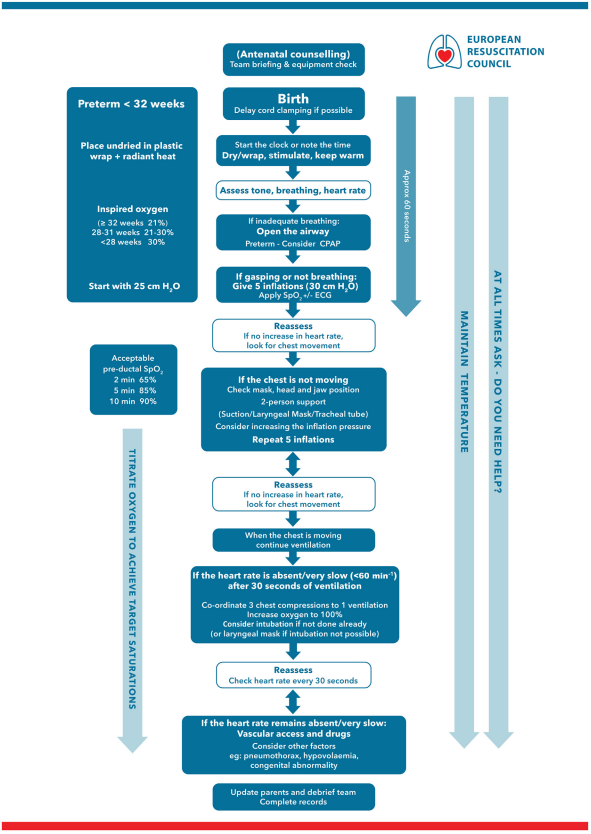
Approximately 5-10% of newborn infants require some form of assistance in order to transition from a liquid-filled lung to an air-filled lung which is the prerequisite to successfully initiate oxygenation and ventilation. Failure to aerate the lung necessitates additional support using stimulation, respiratory support and in few selected cases, cardiopulmonary resuscitation. Due to the emergency nature of the situation, there are still many open questions with regard to the initial management of term and preterm infants immediately after birth. Our research group is dedicated to improving newborn health by critically appraising the steps in the neonatal resuscitation algorithm and by rigorously evaluating possibilities to improve the cardiorespiratory management. This includes observational studies as well as clinical trials which will allow improvement in immediate clinical management in the future.
Very preterm infants have a low lung compliance but a high chest wall compliance making them prone to (micro-)injuries. Accordingly, almost all very preterm infants require some form of (ideally non-invasive) respiratory support. The mode and settings of this respiratory support and the timing and modalities of additional medical management (caffeine, surfactant, etc) are based on current guidelines but there are still many unanswered questions in terms of respiratory management of the most vulnerable population. Thus, there is still a large need for patient-centered outcome-driven trials to improve respiratory management. Also, (patho-)physiology of different ventilation techniques as well as during various interventions needs to be understood better in order to improve patient outcomes. Accordingly, physiological studies in human infants are needed in order to tease out the ideal management in an individualized manner.
Clinical decision-making should always be supported by the best available clinical data. We are committed to translating pre-clinical data as well as clinical data from observational studies to randomized clinical trials in order to implement novel ideas into clinical practice. Currently, we are evaluating the effect of a higher vs lower pressure immediately after birth in very preterm infants in a multicenter, randomized controlled trial (LEOPARD trial, see below). Also, we are combining data from RCTs into systematic reviews by collaboration with the Cochrane Library.
Current projects
The LEOPARD trial is a large, multi-center, international randomized controlled trial initiated by this research group comparing a high (10-12 cmH2O) vs low (5-7 cmH2O) positive end-expiratory pressure during the first ten minutes after birth in very preterm infants (24 0/7 to 31 6/7 weeks gestational age at birth). As a pragmatic trial, all other interventions are at the discretion of the treating clinical team. Primary outcome is a clinically important DOOR outcome at 36 weeks corrected postmenstrual age including death, moderate/severe bronchopulmonary dysplasia, severe brain lesions, long-term mechanical ventilation, pneumothoraces and respiratory failure. The study will be conducted in several centres in Germany, Switzerland and Australia.
The EAGLE study is a prospective observational study assessing electrical impedance tomography (EIT) of healthy term infants after vaginal delivery. In this study, EIT recordings will be performed immediately after birth and starting before the first breath in order to understand changes in lung aeration and pulmonary perfusion in healthy infants which will increase our understanding of this crucial moment in life.
Current status: manuscript accepted for publication
The ALBATROSS study is a prospective observational study in late preterm and term infants assessing EIT data immediately after birth after cesarean section in order to decipher intrapulmonary volume changes in infants with respiratory distress and compare them to infants without respiratory distress.
Current status: manuscript accepted for publication
The RAVEN study is an observational study in healthy term infants after birth assessing electrical impedance tomography (EIT) recordings to describe differences between infants born vaginally and infants born via cesarean section.
Current status: recruitment finished, manuscript phase
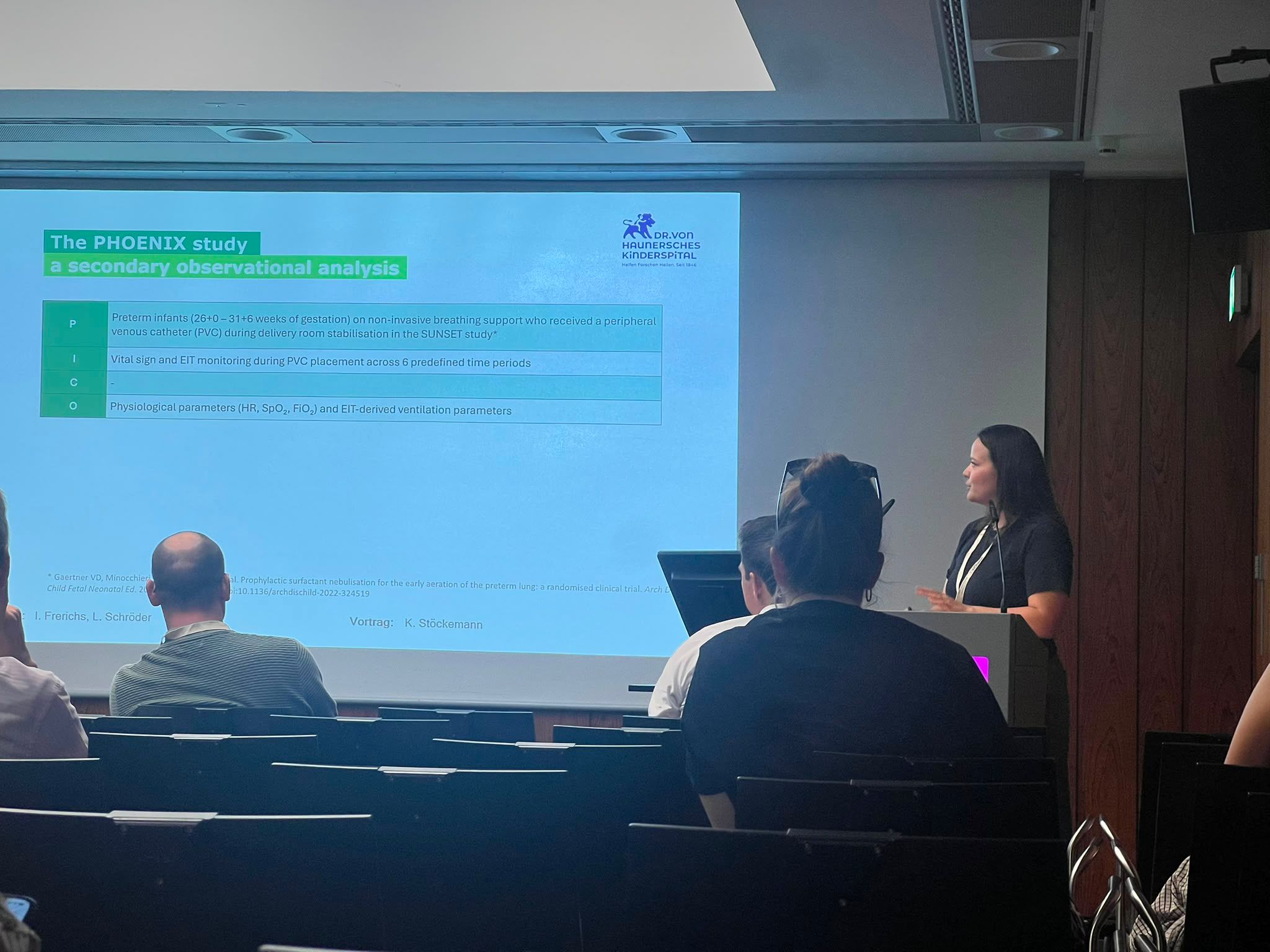
The LION study is a prospective observational study in preterm infants undergoing surfactant application. In this study, we aim to assess electrical impedance tomography (EIT) recordings during intratracheal surfactant application in order to assess lung volume changes during distinct manipulations such as laryngoscopy, surfactant instillation, etc
Current status: recruitment ongoing
The RELAX study is a prospective randomized crossover study in preterm infants < 32 weeks gestational age and 3-14 days of age who are still on supplemental oxygen. Infants will receive an intervention period (recurrent recruitment maneuvers up to 4 cmH2O) and a control period (no changes to the ventilator) for two hours each. Primary outcome is the change in end-expiratory lung impedance (EELI) as measured by electrical impedance tomography.
Current status: recruitment ongoing
The COAT review is a systematic review with meta-analysis in conjunction with the Cochrane collaboration where we critically appraise the evidence on air versus additional oxygen supplementation in term infants needing resuscitation immediately after birth
Current status: data extracted, writing manuscript
PANDA study: protocol phase
EPSILON study: analysis phase
PHOENIX study: analysis phase
INSTANT study: analysis phase
CHOP study: protocol phase
AFRO study: recruitment phase
DOOR studies: protocol phase
ELEPHANT review: published
MRSOPA review: submitted
INSPIRE 2.0 study: protocol phase
Sync_HFO study: protocol phase
Ausgewählte Publikationen
- Gaertner VD, Büchler VL, Waldmann AD, Bassler D, & Rüegger CM (2024). Deciphering Mechanisms of Respiratory Fetal-to-Neonatal Transition in Very Preterm Infants. American Journal of Respiratory and Critical Care Medicine
- Gaertner VD, Waldmann AD, Davis PG, Bassler D, Springer L, Thomson J, Tingay DG, & Rüegger CM (2021). Transmission of oscillatory volumes into the preterm lung during noninvasive high-frequency ventilation. American Journal of Respiratory and Critical Care Medicine
- Rüegger CM, Dawson JA, Cracknell J, Fiander M, Davis PG, & Gaertner VD (2024). Air versus supplemental oxygen for resuscitation of term or late preterm infants at birth. Cochrane Database for Systematic Reviews
- Gaertner VD, Minocchieri S, Waldmann A, Mühlbacher T, Bassler D, & Rüegger CM for the SUNSET study group (2022). Prophylactic surfactant nebulisation for the early aeration of the preterm lung: a randomised clinical trial. Archives of Disease in Childhood: Fetal and Neonatal Edition
- Gaertner VD, Thomann J, Bassler D, Rüegger C (2021). Surfactant nebulization to prevent intubation in preterm infants: A systematic review and meta-analysis. Pediatrics
- Gaertner VD, Waldmann AD, Davis PG, Bassler D, Springer L, Tingay DG, & Rüegger CM (2022). Lung volume changes during apnoeas in preterm infants. Archives of Disease in Childhood: Fetal and Neonatal Edition
- Gaertner VD, Waldmann AD, Davis PG, Bassler D, Springer L, Tingay DG, & Rüegger CM (2022). Lung volume distribution in preterm infants on non-invasive high-frequency ventilation. Archives of Disease in Childhood: Fetal and Neonatal Edition
- Gaertner VD, Rüegger CM, Bassler D, O'Currain E, Kamlin COF, Hooper S, Davis PG, & Springer L (2021). Effects of tactile stimulation on spontaneous breathing during face mask ventilation. Archives of Disease in Childhood: Fetal and Neonatal Edition
- Gaertner VD, Rüegger CM, O’Currain E, Kamlin COF, Hooper S, Davis PG, & Springer L (2020). Physiological responses to facemask application in newborns immediately after birth. Archives of Disease in Childhood: Fetal and Neonatal Edition
- Belting C, Rüegger CM, Waldmann AD, Bassler D, & Gaertner VD (2024). Rescue nasopharyngeal tube for preterm infants non-responsive to initial ventilation after birth. Pediatric Research
- Gaertner VD & Rüegger CM (2023). Optimising success of neonatal extubation: respiratory support. Seminars in Fetal and Neonatal Medicine
- Gaertner VD, Helwig ED, Manley BJ, Kamlin COF, Kraus A, & Rüegger CM (2022). “Harry Potter and the Multitudinous Maladies” – Evaluation of morbidity and mortality among witches and wizards: A Retrospective Population-Based Observational Study. Medical Journal of Australia
- Gaertner VD, Mühlbacher T, Waldmann AD, Bassler D, & Rüegger CM (2023). Early prediction of pulmonary outcomes in preterm infants using electrical impedance tomography. Frontiers in Pediatrics
- Mutesu-Kapembwa K, Lakhwani J, Benkele RG, Machona S, Shamalavu MS, Chintende JM, Chisela SM, Kapoma S, Mwanza J, Chelu W, Mwendafilumba M, Kapembwa K, & Gaertner VD (2022). Bridging the gap in neonatal resuscitation in Zambia. Frontiers in Pediatrics
- Gaertner VD, Restin T, Bassler D, Fauchère JC, & Rüegger CM (2022). Case Report: Intrapulmonary Tidal Volumes in a Preterm Infant with Chest Wall Rigidity. Frontiers in Pediatrics
- Gaertner VD, Waldmann AD, Bassler D, Hooper S, & Rüegger CM (2022). Intrapulmonary Volume Changes during Hiccups versus Spontaneous Breaths in a Preterm Infant. Neonatology
- Gaertner VD, Bassler D, Zimmermann R, & Fontijn J (2021). Reference values for umbilical artery lactate by mode of delivery and gestational age – a retrospective observational study. Neonatology
- Gaertner VD, Bassler D, Rüegger CM (2021). Does surfactant nebulization prevent early intubation in preterm infants? A protocol for a systematic review and meta-analysis. Systematic Reviews
- Plastina L*, Gaertner VD*, Waldmann A, Thomann J, Bassler D, & Rüegger CM (2021). The DELUX study – Development of Lung volumes during extubation of preterm infants. Pediatric Research
- Büchler V, Gaertner VD, Thomann J, Bassler D, & Rüegger CM (2024). Lung volume changes in stable preterm infants weaned from nCPAP to high-flow: a prospective cohort study. CHEST Pulmonary
- Mileder L, Wagner M, Kaufmann M, Gaertner VD, Rüegger CM, & Springer L (2023). How should we perform neonatal mask ventilation during MR SOPA corrective steps? Resuscitation Plus
- Thomann J, Rüegger CM, Gaertner VD, O'Currain E, Kamlin COF, Davis PG, & Springer L (2022). Tidal volumes during delivery room stabilization of (near) term infants. BMC Pediatrics
- Thomann J, Gaertner VD, Waldmann AD, Plastina L, Bassler D, & Rüegger CM (2023). Nasal high frequency oscillatory highflow therapy in preterm infants: A randomized crossover trial. Pediatric Pulmonology
- Mühlbacher T, Gaertner VD, Bassler D (2020). History of caffeine use in neonatology and the impact of the CAP trial. Seminars in Fetal and Neonatal Medicine
- Wellmann S, Manegold-Bauer G, Fischer T, Schaeffler L, Gaertner VD, Fill Malfertheiner S, & Burkhardt T (2021). Improving neonatal and maternal outcome by inducing mild labor before elective cesarean section: the LACARUS randomized controlled trial. Neonatology
Oktober 2025
David Tingay verstärkt die Forschungsgruppe
Prof. David Tingay ist klinischer Forscher am Murdoch Children's Research Institute und als Facharzt für Neonatologie am Royal Children's Hospital in Melbourne, Australien, tätig. Er zählt zu den führenden Forschern auf dem Gebiet der neonatalen Atemphysiologie und wird während seines Sabbaticals für zwei Monate die Forschungsgruppe verstärken. Herzlich willkommen, David!
Februar 2025
Vincent Gaertner erhält Förderung von der Deutschen Forschungsgemeinschaft (DFG)
Das Forschungsprojekt „From EAGLE to LEOPARD“ von DZL-Forscher Vincent Gaertner, Arzt am Dr. von Hauner Kinderkrankenhaus (LMU) und Leiter des DZL-Standorts München (CPC-M), wird von der Deutschen Forschungsgemeinschaft (DFG) als Emmy-Noether-Forschungsgruppe über einen Zeitraum von sechs Jahren gefördert: Dr. Gaertner möchte unser Verständnis darüber verbessern, wie dieser Übergang funktioniert und wie Frühgeborene im Kreißsaal optimal unterstützt werden können. Ziel ist es, die medizinische Versorgung in dieser einzigartigen und kritischen Lebensphase zu verbessern und damit die Überlebenschancen und die spätere Lebensqualität der Neugeborenen zu erhöhen.
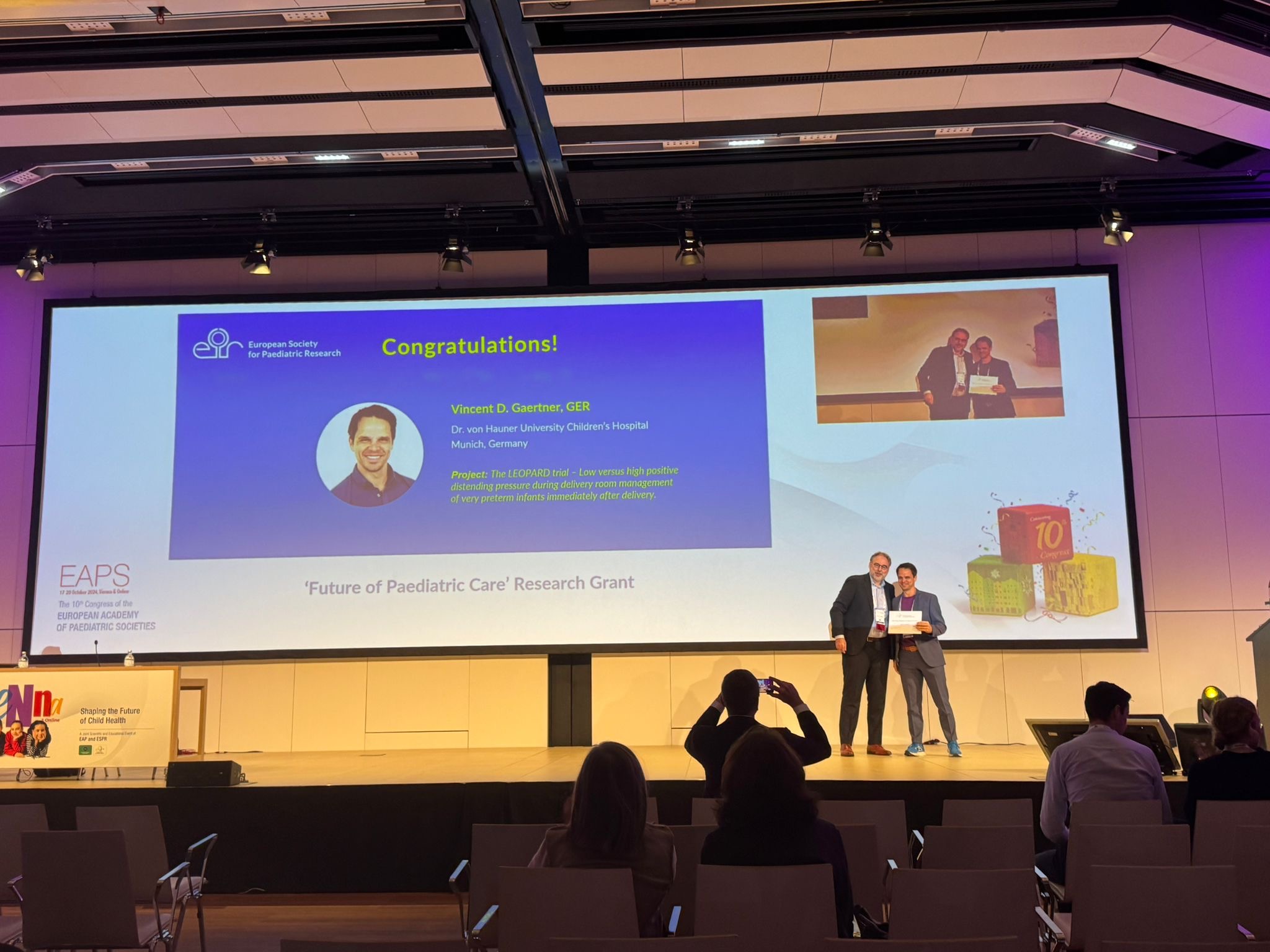
November 2024
Vincent Gaertner wird von der Europäischen Gesellschaft für Kinderheilkunde mit dem „Future-of-Paediatric-Care“-Stipendium und dem Preis für Nachwuchswissenschaftler ausgezeichnet
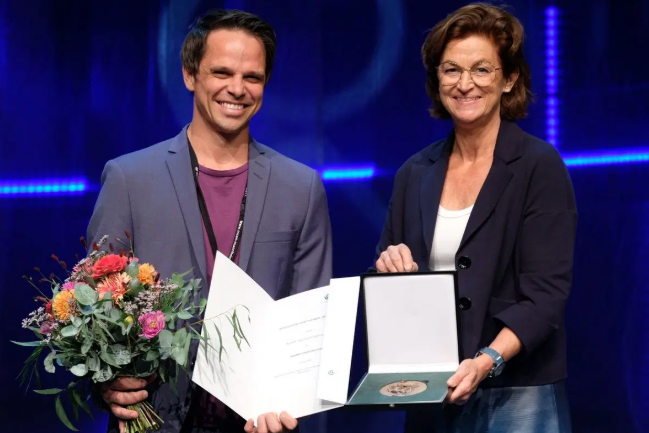
September 2024
Vincent Gaertner erhält die Adalbert-Czerny-Medaille der Deutschen Gesellschaft für Kinder- und Jugendmedizin
Dr. med. Vincent Gaertner (35) wurde von der Deutschen Gesellschaft für Kinder- und Jugendmedizin mit der Adalbert-Czerny-Medaille 2024 ausgezeichnet. Der Preis, der mit 10.000 Euro und einer Adalbert-Czerny-Medaille dotiert ist, würdigt besonders bedeutende wissenschaftliche Leistungen auf dem Gebiet der Pädiatrie.

Förderung
Diese Forschungsgruppe wird von verschiedenen öffentlichen Einrichtungen gefördert, darunter die Deutsche Forschungsgemeinschaft im Rahmen des Emmy-Noether-Programms, die European Society for Paediatric Research, das Klinikum der LMU, die Friedrich-Baur-Stiftung und das Deutsche Zentrum für Lungenforschung.
Kollaborationen
Wir arbeiten eng mit unseren Partnern in Universitätskliniken und Hochschulen auf der ganzen Welt zusammen, von San Diego in Kalifornien über verschiedene Standorte in Europa und Lusaka in Sambia bis hin nach Melbourne in Australien. Gemeinsam mit unseren Partnern entwickeln wir wichtige klinische Studien, unterhalten Ausbildungspartnerschaften zur Verbesserung der Lernergebnisse unserer Studierenden und organisieren verschiedene jährliche Tagungen.
Offene Stellen:
Wir suchen aktiv nach Forschern aller Karrierestufen (Postdocs, klinische Wissenschaftler, Doktoranden und Medizinstudenten, Praktikanten, Studienpfleger). Wir bieten ein hervorragendes Forschungsumfeld in einer klinischen Forschungsgruppe und suchen hochmotivierte Personen, die
- Interesse an der Neugeborenenversorgung und/oder der Lungenphysiologie haben
- in einem Forschungsumfeld arbeiten möchten, in dem klinisch relevante Fragen beantwortet werden
- sehen möchten, wie ihre Forschungsergebnisse unmittelbar in die klinische Versorgung einfließen
- gerne in einem kooperativen Team in einem lebendigen wissenschaftlichen Umfeld arbeiten
Unsere Gruppe widmet sich dem besseren Verständnis der Physiologie der kardiopulmonalen Anpassung während des Übergangs vom Fötus zum Neugeborenen und der Optimierung der klinischen Atemwegsversorgung sowohl für termingeborene als auch für Frühgeborene. Wir führen große und kleine klinische Studien zu dringenden klinischen Fragen durch, setzen die Ergebnisse in hochaktuelle systematische Übersichtsarbeiten um, die internationale klinische Leitlinien unterstützen, und versuchen, die Lungenpathophysiologie während klinischer Interventionen zu verstehen. Dazu arbeiten wir mit einem breiten wissenschaftlichen Netzwerk in München, Deutschland und weltweit zusammen.
Bitte zögern Sie nicht, uns per E-Mail zu kontaktieren, wenn Sie an einer Zusammenarbeit mit uns interessiert sind oder Kooperationsprojekte besprechen möchten.